 Crown Shrine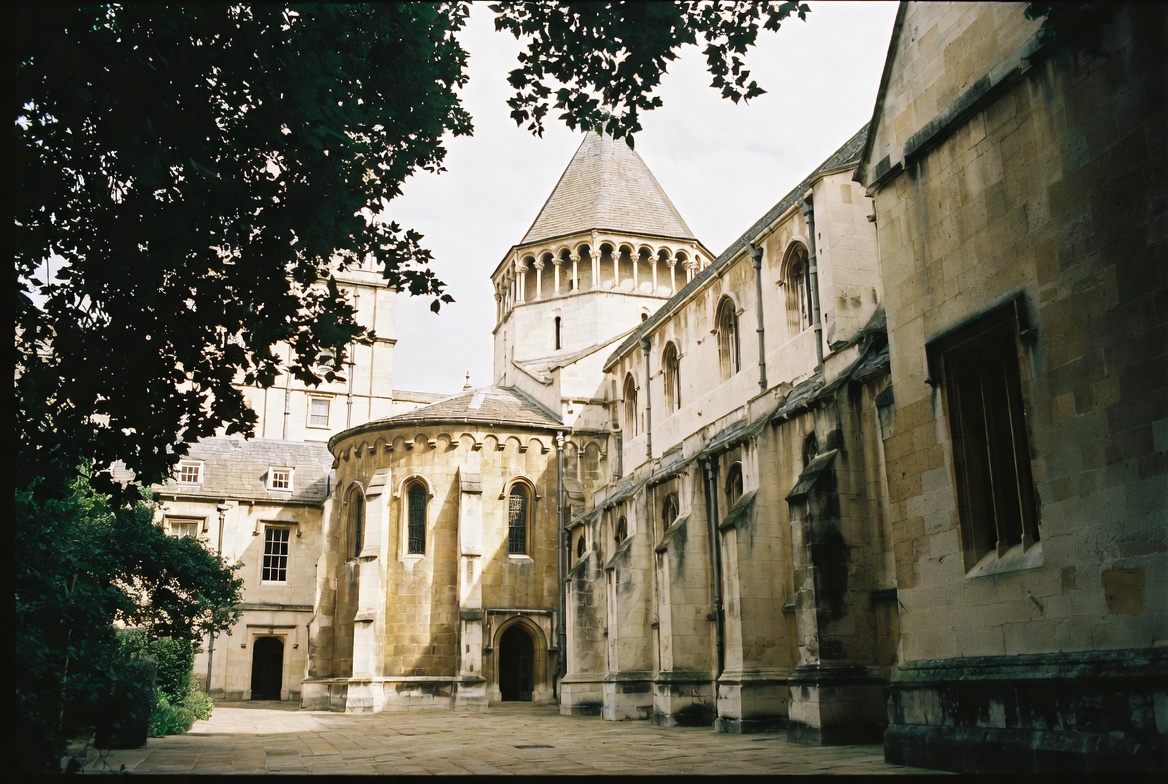
A round church in London
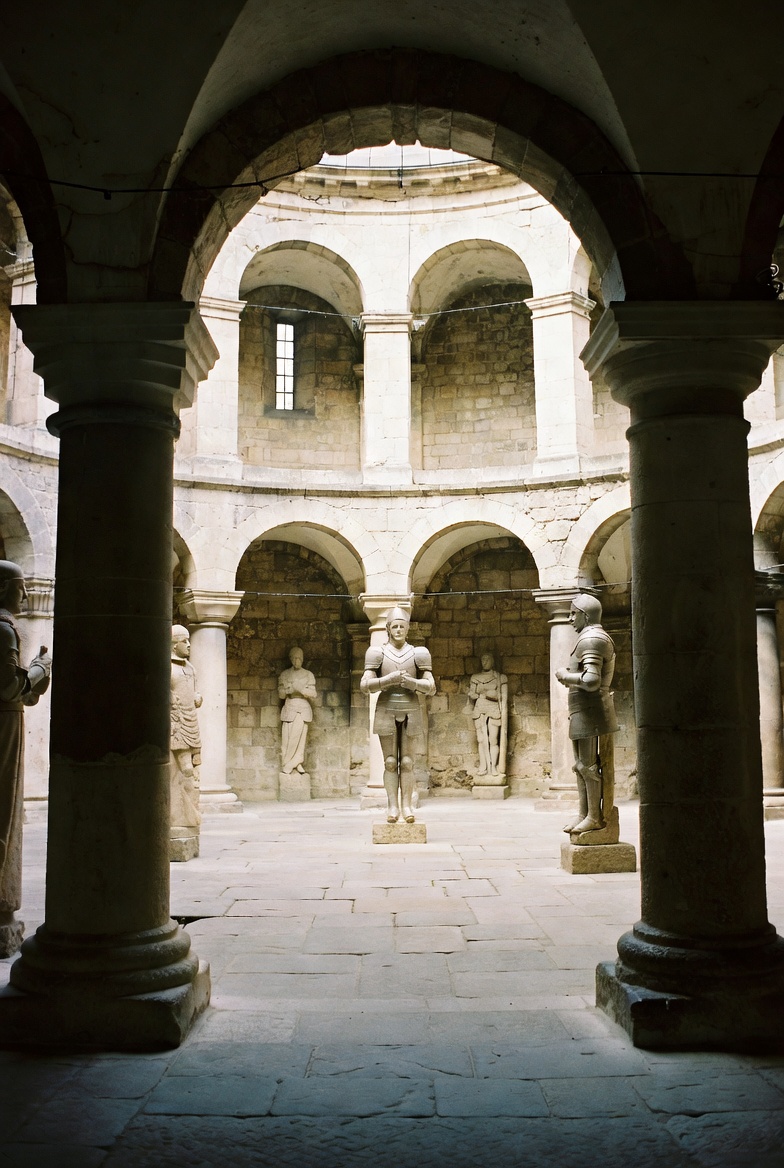
The Knights Templar arrived in England around 1128 and built their London headquarters on the bank of the Thames. The church they consecrated in 1185, in the presence of King Henry II, was modelled on the Church of the Holy Sepulchre in Jerusalem — hence its remarkable circular nave. A long rectangular chancel was added in 1240, giving the building its present elongated key-shape.
From Templars to barristers
After the suppression of the Templars in 1312, the site eventually passed to the lawyers who had taken over the Templars' lodgings. The church had already played a central role in English constitutional history: in 1214–15 King John used the Temple as his London headquarters during the negotiations that produced Magna Carta, and William Marshal, Earl of Pembroke — eulogised at his funeral here in 1219 as "the greatest knight in the world" — was buried beneath the round nave. To this day, the church serves the Inner and Middle Temple — two of the four Inns of Court — and the Master of the Temple is appointed directly by the Crown.
What to see
- The thirteenth-century stone effigies of Templar knights laid out around the round nave.
- The gilded Purbeck marble columns and grotesque carved heads.
- The Gothic chancel with its slender clustered piers.
- The west door, one of the finest pieces of Romanesque carving in London.
Visiting
Opening hours can be irregular because the church serves the working life of the Inns of Court. Always check ahead. A small admission charge applies on most days, and a sung Sunday service at 11:15 a.m. is open to all. The acoustic is exceptional and the choir well known for early music.